
"A Natural" on Camera
Confidence sells, authenticity buys: how to come off as a natural on camera
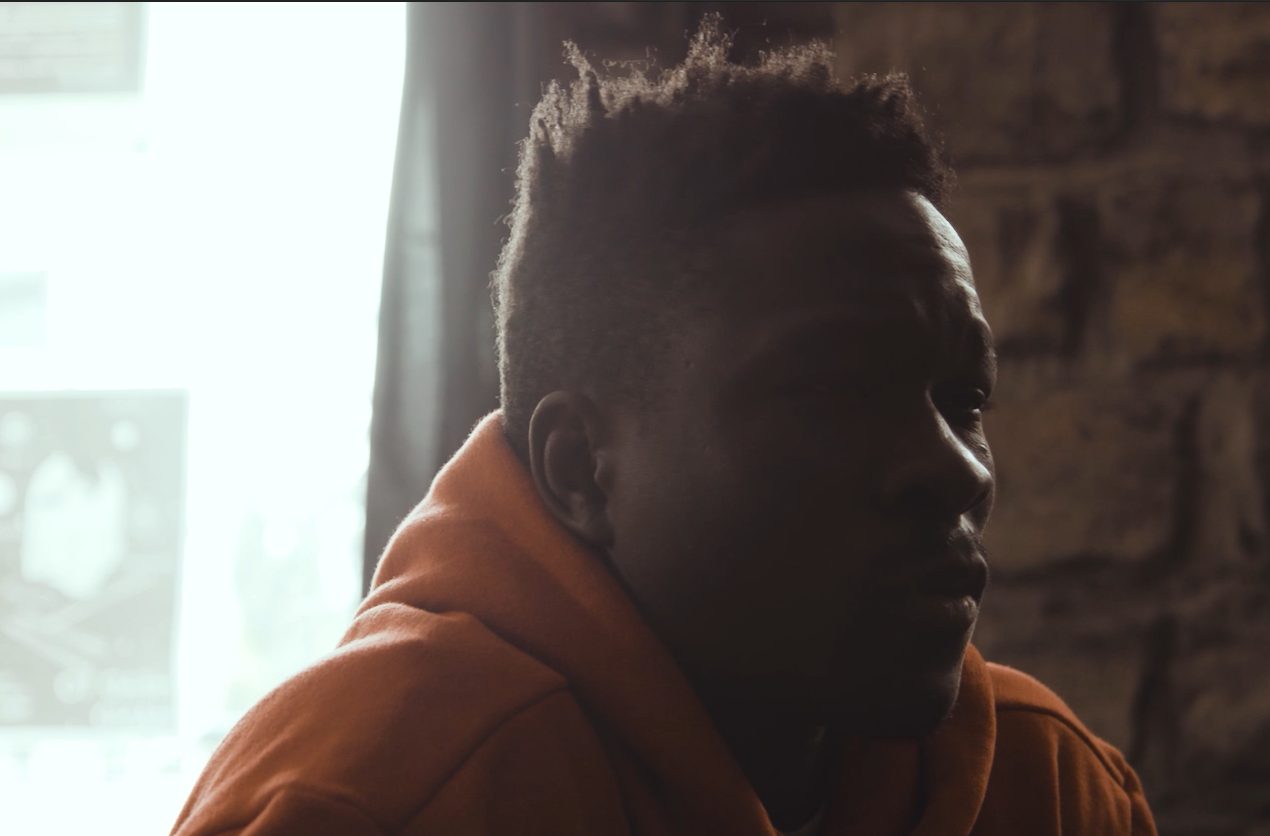
How do you get someone, or yourself, to actually look normal on screen?
I've been meeting a lot of SMEs in the past 12 months, and when the doco or filmed corporate work comes up, this is the question I get asked most.
It seems people find it really difficult to be normal on camera.
Whatever "normal" even means, because putting yourself on screen is a genuinely abnormal situation... and the first step is owning that.
There're lights, a big fluffy mic, a glass eye and everyone in the room is staring at you while telling you, "You're doing great!" But there's also discussions about what your hands are doing. Of course it's weird.
So step 1 is recognising the weirdness and figuring out what works for you inside it.
This piece is about getting you or your interviewee comfortable and natural sounding on camera, and ALL the other related interview tips we could jam into one place.
Why people ask
Honestly, it's hard. And people want to come off as authentic, which... hey, is a buzzword for a reason. It's more attractive and actually moves the viewer.
Confidence sells, authenticity buys.
OK, that's either clever or vomit-inducing wordplay. 5 "writing style" points for me! (my new hack for writing more is awarding myself style points, for good or worse.) But the point holds.
Also, business owners are told they need to be seen as thought leaders and have stronger, more consistent online presence these days. The ask is "create more content, get out there", and the unspoken anxiety underneath sounds something like, "how do I speak on camera without sounding like all the other people speaking on camera that I can't help judge as fake?" (-2 style points ... don't judge)
The reality is, there's a myriad of approaches to getting comfy with all this un-comfiness.
The core answer is time. And practice.
The first thing I tell people is that a good result takes time. Time to prep, and time during the filming itself.
You can't rush the process, and you need to have the space for the interviewer and interviewee to breathe.
It also takes presence in the moment, which comes from proper planning.
Unless you're one of those natural speakers who's completely at home on camera (and even then, some of the greatest actors hate watching themselves back), it'll feel awkward at the start, but like all good things, getting great takes practice. Practice. Practice. Cue Allen Iverson.
And though Iverson barely wanted to talk about practice or the game, I do. So let me walk through it from the interviewer's seat first, and then of someone being interviewed for a piece. We'll park the self-filmed video for now.
Interviewing someone
Space of mind, space to create
Start with intentionality, which means being fully aware that you're making something to be watched. That is the reality of the room, and accepting it is half the battle. Remember step 1.
Namaste.
You're in it now, and what you do, how you react to the question, what you bring to the moment is the raw content that sets the tone for the piece you're going to edit together. The interview is the material, and there's nothing else.
Be prepared. Be be prepared.
For something more elaborate, like a short doc with interviews that needs to be concise and hit the nail on the head, preparation is everything.
Logistics - like locations that look good and are noise free, the timing of the day for the interview, thinking of energy levels and comfortability, lights, crew, gear - essentially anything that might impact, is at least thought about so the day itself can be about people.
And story. Cause the interviews will be what you're building your story off here.
We like to walk in with what we call a "skeleton script":
- key messages or what you might develop into plot points,
- the likely best questions for the interview
- the higher level story structure you'd ideally hit
- the (presumed) answers that will help tell your story
- and any logistics you can lock down for the filming day/time-slot.
Sometimes we write a fuller version, basically the dream cut of the content of the final video, so we can shoot toward it. This would require, ideally, a pre-interview.
It's honestly the key to setting yourself up right for the interview process (amongst many other things). And it doesn't need to be every question you will ask again, but at least a general overview of the direction of questions that you might build off, and know which leads to take in the interview room. It avoids time-wasting later so you can identify key directions that apply to your subject before cameras start rolling. It also helps establish a good rapport, especially if you've never met the person.
The skeleton script isn't to have lines said verbatim as what you have it written, but rather an ideal version that you can reverse-engineer questions to.
That way, you'll know the overall story that works, and also the beats required to create pace in your story. Working off that, if the answers differed from the pre planned path, you can be prepped to pivot towards what's needed to still have the details and conflicts that stories require, and their resolution.
The beauty of pre-interviews is that you're also prepping for everything you *can't* expect. The stuff you want to avoid because it's not useful. The magic that catches you off guard or even turns out to be the whole edit.
So don't lock yourself into the dream script, and give the interviewee some idea of direction beforehand because setting expectations calms nerves.
Depending on the piece, you might not want to send them every question. We find on more corporate jobs, people worry about giving the perfect answer and end up memorising lines. Then when the question comes, they perform their memorised piece, which means they're acting. And that is a surefire way of coming off fake. (20 style points. First time I've ever written "surefire". Hooray.)

Documentary-style recruitment films for a bank, where everyone on camera is a real employee. Exactly the kind of job where people arrive with an answer already rehearsed.
Jane's Story - ANZ Data Scientist →The fix on the day is to ask the question from a different angle. Come at the same point from a different doorway, which requires presence, which brings us to...
The process on filming day
When time is on your side (and ideally it should be), keep the room light and comfortable. Spend the first few minutes just talking and finding the rhythm of the two of you, so they're at ease before the camera matters.
Set them up for how the interview will flow: "questions will repeat differently, you can take your time, you can stop whenever, and if you trail off mid-thought just pause and come back to it." Remind them everything is being edited, so the goal is honesty and being as concise as you can manage. Pause, think, then speak.
Make the interview feel like a conversation. Someone answering a question in conversation comes off way more natural than someone giving a speech, even with memorised lines.
If the interviewee slips into perform-mode anyway (and they will), you've got tools. Throw a surprise question, change topic, loop back from a different perspective, stay quiet. All of this is going to be cut together later, so the more varied raw material you have, the more flexibility the edit has.
But it only works if you know where you're heading, which is why the pre-planning matters.
Your job as interviewer is to set the energy too, because people will only go as deep as they feel safe, and if they don't trust you they won't open up. Ask open-ended questions, where "Tell me about a time when..." opens way more than "Did you ever...".
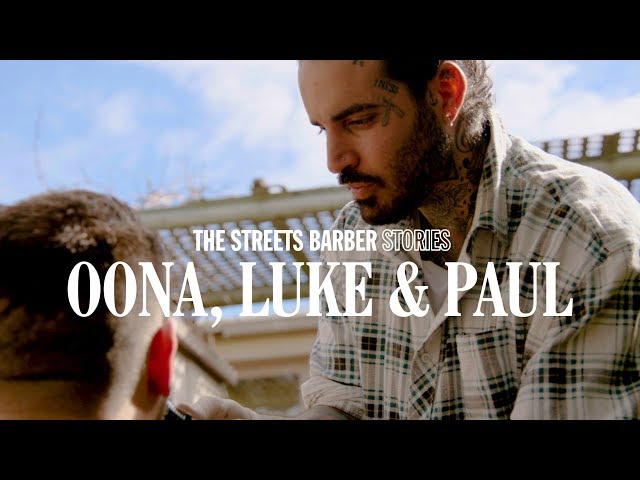
People will only go as deep as they feel safe, and on the streets of Melbourne we made sure the whole process felt comfortable and our subjects felt they were in control of their own narratives.
The Streets Barber Web Series →Sometimes, even though you're after concise lines, let answers run long, let tangents happen, because some of the best material we've ever shot came from someone given room to breathe to find the "right" words.
Your job as the interviewer is also to make sure those right words are said. In a way that feel complete, that you can cut out and that most importantly makes sense.
Listen actively, acknowledge them, mirror their energy. But keep your own voice off the take where you can, because "Mm-hmm" and audible nods bleed into the edit and you'll spend hours trying to cut around them.
Ask them to answer in full sentences that include the context of the question. So instead of "Great", you want "The best thing about my day is...". Their answer needs to stand on its own when the question is cut out.
And if an answer is weak, don't move on. Find ways that gets those right words right.
Pacing the day
Open with easy warm-up questions, and don't lead with the hardest or most important content. (Sometimes. Sometimes you do need to go in hard. It depends on what you are going for. But mostly... )
The voice and posture you get in minute 2 will be different from the voice and posture you get in minute 40, so save your big moments for when they've thawed out.
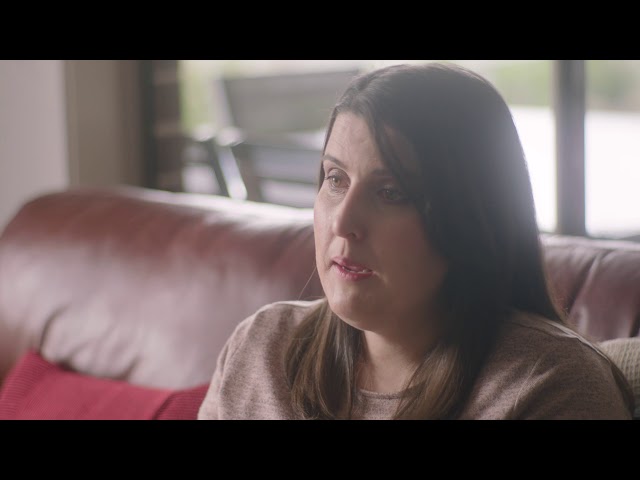
Blood donors and recipients for Australian Red Cross Lifeblood, on subjects most people find hard to talk about at all. None of that happens in the first ten minutes.
Australian Red Cross - Emily's Story 60sec →This is also why we redo the most important questions at the end. Once the subject is relaxed, the same question often delivers a much more natural answer. That includes the boring stuff. "Hi, I'm Jane and I'm the CEO of..." captured cold at the start almost always feels stiffer than the same line captured after an hour of conversation, so loop back to it once they've warmed up.
When you wrap, ask the subject, the crew and the client if there's anything worth adding. Better to have too much footage than too little. And remind the room of basic interview courtesy: crew quiet, no movement, no rustling. Anything that pulls focus from the subject pulls focus from the take.
Looking into the camera, if that's what you're after
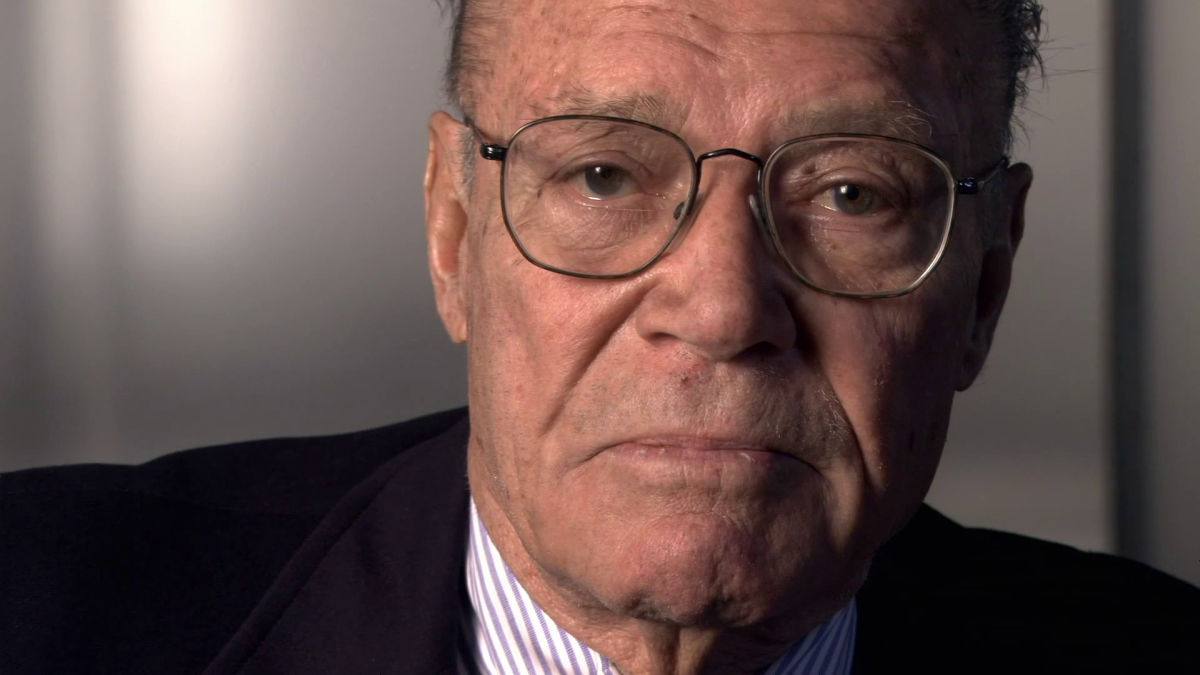
Stare into his soul, do you see it? It's a powerful technique, but use with purpose. It can humanise a villain, or make the emotional hit deep.
For straight-to-camera setups like the above where the interviewee needs to look down the barrel of the lens for something more intense or just cause you like it, there are tricks.
For the simplest no cost option, you'd want to have the camera at their eye-line, and you can place yourself as close to behind the camera with your eyes still being able to see and talk to your subject. Kinda awkward, but works well when you're on a long lens and the interviewee is further away.
Or the Interrotron-style rig, created originally and popularised by Errol Morris (these days a VoxBox or an EyeDirect) puts the interviewer's face on a mirror over the lens, so the subject looks at a real human while the camera reads a direct gaze. Close to magic, and you can hire one now without re-mortgaging the studio.
But whether you choose to have your subject in a more traditional interview setup where they are talking to someone off camera, or something more elaborate like the above, you still want people to sound the way they sound in a conversation.
"Interviewing" yourself or playing the interviewee
Different beast, but the same principles with slightly different tools. There are a few routes worth knowing.
The first is to memorise the crap out of your words. Know them forwards and backwards. Unless you're one of those Kieran Culkin types with a photographic memory who reads and memorises pages in 30 seconds, this is going to take a while. And you need to know it that well, otherwise it will feel stiff as you perform while trying to recall the words.
The second route, which I lean towards for most people, is to remember key phrases. Shorthands to the big messages. Then speak from the heart, off the cuff. For most people, this sells the story better, and more importantly, sells you better. You can use sticky notes off the camera with key words, or, in the age of the self filmed thing is what everyone is used to, you can cut. And then speak to your next point.
The third option is a teleprompter, with plenty of cheap ones around now, or you can just hire one. Worth it for longer pieces, but rehearse from it extensively, in a similar way you might if you were trying to memorise it. You want the words to pour out of you naturally, without thinking, without over performing.
There's a reason why directors like Stanley Kubrick or David Fincher often do over 50 takes. They try to exhaust the "performance" out of the performer, and so it comes out almost without thought.
Whichever route you pick, when the nerves arrive (and they always do), there are a handful of simple things that bring you back to the room. Especially when the inner voice starts shouting STAY CALM at you off camera. Because the person in the mirror can't help.
More tips on talking like a human on camera
Pronounce everything clearly and project, but don't shout. Speak with a little more energy and intonation than you would in normal conversation, because the camera flattens vocal dynamics slightly and you need to compensate for that.
Slow down. People speak faster when they're nervous, and a measured pace reads as calm and authoritative even when you don't feel either of those things.
Speak from the heart where you can, because passion inspires and if someone asked you to do this interview they think you've got something worth saying. Trust that. Use natural pauses, because silence is its own piece of information and it gives weight to what you've just said and time for the viewer to catch up.
Vary your pace. Monotone delivery loses audiences quickly, even when the content is strong, and the voice that lands is the voice that breathes. Avoid vocal fillers like um, ah, like, you know, and practise replacing them with a brief, confident silence, which is easier said than done.
And finally, when to be quiet
A lot of all this takes time, practice, and being present in the moment, on both sides of the lens. Know when to break, when to change tactics, when to persist and, most importantly, if not one of the most important rules (which if I get to use the word important 3 times in a sentence that's 30 points..... And i think the last one counts!) - when to be quiet.
...
Silence.
...
Give the room space to breathe sometimes, and give each other space to think. That's when the unexpected happens, including the thought that shifts the whole piece, the line the interviewee adds at the end of their answer because you didn't jump in, the moment that gets a little too real for comfort. That's often when things actually begin to feel natural.
Watch Louis Theroux for 30 seconds and you'll see this whole piece distilled into a single technique. He asks the question, he waits, and he lets the subject sit with the silence. Then the real answer arrives, the one they didn't plan to give.

Filmed across Victoria's West Wimmera, these took time and patience, letting people speak freely to build something a quick interview would never uncover.
Adnate, Indigenous Recognition →Related services
Vidad is co-director at Round 3 Films, a Melbourne-based video production company specialising in documentary storytelling for social impact, brands, and broadcast.